Archives
- 2018-07
- 2018-10
- 2018-11
- 2019-04
- 2019-05
- 2019-06
- 2019-07
- 2019-08
- 2019-09
- 2019-10
- 2019-11
- 2019-12
- 2020-01
- 2020-02
- 2020-03
- 2020-04
- 2020-05
- 2020-06
- 2020-07
- 2020-08
- 2020-09
- 2020-10
- 2020-11
- 2020-12
- 2021-01
- 2021-02
- 2021-03
- 2021-04
- 2021-05
- 2021-06
- 2021-07
- 2021-08
- 2021-09
- 2021-10
- 2021-11
- 2021-12
- 2022-01
- 2022-02
- 2022-03
- 2022-04
- 2022-05
- 2022-06
- 2022-07
- 2022-08
- 2022-09
- 2022-10
- 2022-11
- 2022-12
- 2023-01
- 2023-02
- 2023-03
- 2023-04
- 2023-05
- 2023-06
- 2023-08
- 2023-09
- 2023-10
- 2023-11
- 2023-12
- 2024-01
- 2024-02
- 2024-03
- 2024-04
- 2024-05
-
The basis for the protonation
2024-05-15

The basis for the protonation of chitosan is the alkaline primary amino group, which is also the reason for the special properties of chitosan (Guibal, Van Vooren, Dempsey, & Roussy, 2006; Tamer et al., 2017; Yang et al., 2014). Our previous work (Meng et al., 2012) and several other reports (Yan et
-
br Funding This study was supported by a
2024-05-15
Funding This study was supported by a grant from the Science and Technology Program of Guangzhou (No. 2014Y2-00181) and the personnel training program of Southern Medical University (No. PY2015N023). Conflict of interest statement Authors’contributions Introduction Chronic cerebral hypo
-
br Conclusion br Introduction The
2024-05-14
Conclusion Introduction The identification of Alzheimer's disease (AD) biomarkers and their ability to measure pathology antemortem has led to a fundamental reconsideration of the pathogenesis of AD. The importance of biomarkers was already reflected in revised diagnostic criteria proposed by
-
br Aldehyde sensors to monitor substrate levels Previous eff
2024-05-14
Aldehyde sensors to monitor substrate levels Previous efforts to ameliorate metabolic diseases frequently relied on biochemical methods which could measure the levels of toxic substrates in Necrosulfonamide or bodily fluids (blood and serum or plasma, urine, cerebrospinal fluid). Therapeutic ef
-
br Conclusion br Conflict of interest br Acknowledgements br
2024-05-14
Conclusion Conflict of interest Acknowledgements Introduction Human salivary aldehyde dehydrogenase (hsALDH) (E.C. 1.2.1.5) is the first line of defence against toxic aldehydes in the oral cavity. HsALDH is primarily a dimeric, class 3 ALDH (ALDH3A1) specific for aromatic and long/medium
-
Herein we employ an adapted targeted
2024-05-14
Herein we employ an adapted targeted quantitative proteomic isotope dilution method, developed in our laboratory [[18], [19], [20], [21]], to quantify membrane transporters in fresh lung from five donors, in four immortalized human lung cell lines and in three control cell lines. We quantify twelve
-
ML133 HCl The rank order of agonist potency in turkey
2024-05-14

The rank order of agonist potency in turkey cardiac chambers demonstrated the predominant presence of the β-adrenergic receptor subtype, in line with the receptor classification by . However, a previous radioligand binding study in the left ventricles of 7-week old turkeys reported the existence of
-
In order to investigate their
2024-05-14
In order to investigate their effects in vitro, therefore, we first used TE671 cells, which have provided a useful source of human AChR for in vitro and radioimmunoassay studies. We found no marked effect of either MuSK-MG or SNMG sera on AChR numbers or on AChR subunit expression. This appears to c
-
Among different classes of pesticide organophosphates as wel
2024-05-14
Among different 17-DMAG sale of pesticide, organophosphates as well as pyrethroids are more frequently used because of their high insecticidal property, low mammalian toxicity, less persistence and rapid biodegradability in the environment. These compounds are used extensively in agriculture suppos
-
Very recently Niessen et al have
2024-05-14
Very recently, Niessen et al. have described the resensitizing effect of MB327 on nAChR performing solid-supported membrane (SSM)-based electrophysiological experiments (Niessen et al., 2016) using plasma membrane preparations obtained from Torpedo californica. These findings validated and underline
-
Compounds were profiled for their inhibitory activity
2024-05-14
Compounds – were profiled for their inhibitory activity against dipeptidyl peptidase-IV Activity and/or Structure Homologues (DASH) [e.g. DPP2, DPP8 and DPP9] and non-DASH [eg. post-proline cleaving enzyme (PPCE), neutral endopeptidase (NEP), aminopeptidase P (APP), aminopeptidase N (APN)] enzymes.
-
br Materials and methods br Results
2024-05-14
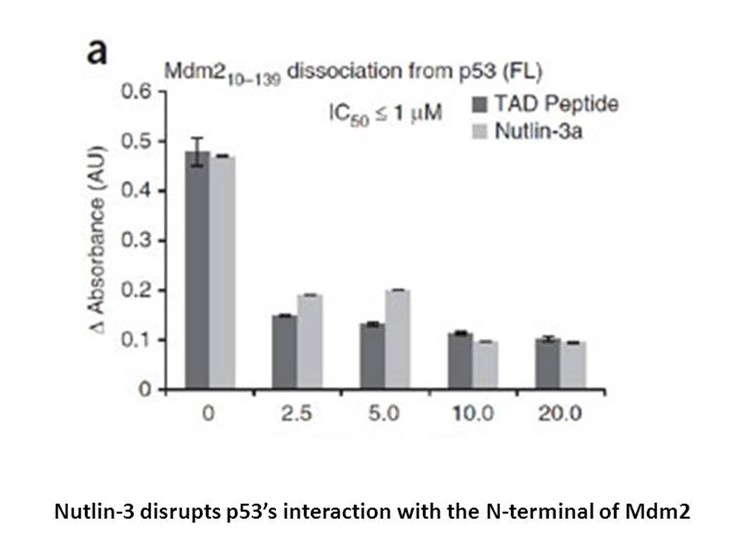
Materials and methods Results Discussion Prostate cancer represents an ideal candidate for chemoprevention because of its high incidence and long latency to clinically significant disease [17]. The precancerous lesion PIN may also be a suitable target for ablation in chemoprevention strateg
-
rs G allele was previously associated
2024-05-14
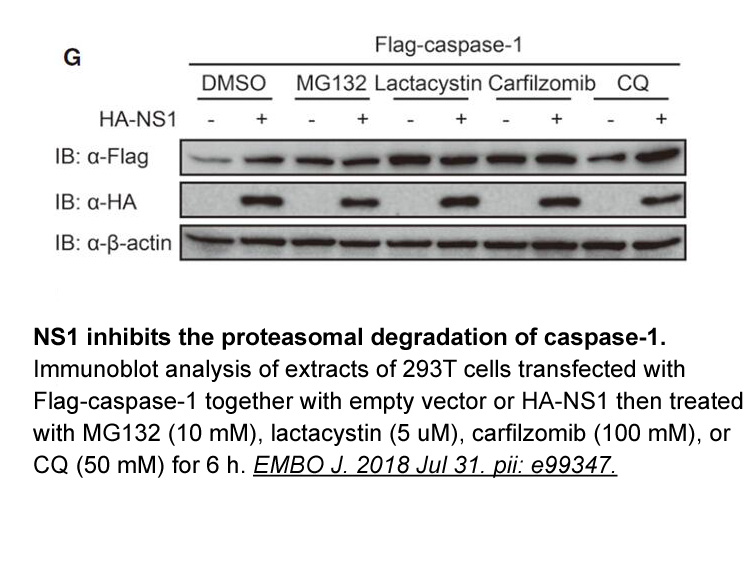
rs523349 G allele was previously associated with a decrease in the conversion rate of testosterone to DHT (Beesley et al., 2007). This SRDA52 variant may have a trend towards higher testosterone availability, which according to the US Food and Drug Administration is described as a teratogen of categ
-
A promising target that is involved in the biosynthesis
2024-05-14
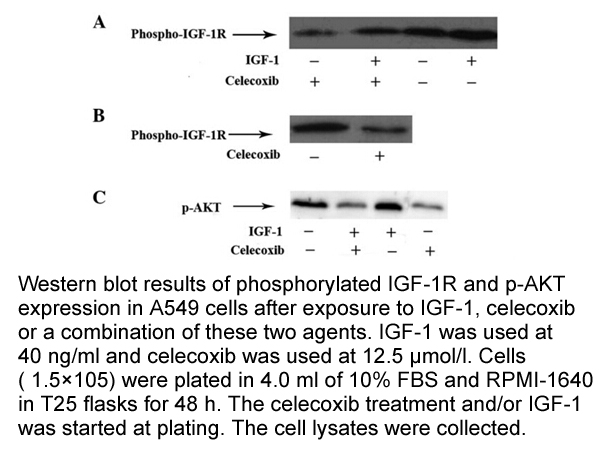
A promising target that is involved in the biosynthesis of the precursor LTA4 is the 5-LO-activating protein (FLAP), which in vivo is seemingly indispensable for LT formation [8], [9]. FLAP, a member of the MAPEG family (membrane-associated proteins in eicosanoid and glutathione metabolism), is an i
-
br Autophagy in the central
2024-05-14

Autophagy in the central nervous system The autophagic process appears to be very important for the cells of the central nervous system, as it allows to maintain the functional integrity of the nervous tissue. Indeed macroautophagy is involved in the regulation of homeostasis of the CNS, playing