Archives
- 2026-06
- 2026-05
- 2026-04
- 2026-03
- 2026-02
- 2026-01
- 2025-12
- 2025-11
- 2025-10
- 2025-09
- 2025-03
- 2025-02
- 2025-01
- 2024-12
- 2024-11
- 2024-10
- 2024-09
- 2024-08
- 2024-07
- 2024-06
- 2024-05
- 2024-04
- 2024-03
- 2024-02
- 2024-01
- 2023-12
- 2023-11
- 2023-10
- 2023-09
- 2023-08
- 2023-06
- 2023-05
- 2023-04
- 2023-03
- 2023-02
- 2023-01
- 2022-12
- 2022-11
- 2022-10
- 2022-09
- 2022-08
- 2022-07
- 2022-06
- 2022-05
- 2022-04
- 2022-03
- 2022-02
- 2022-01
- 2021-12
- 2021-11
- 2021-10
- 2021-09
- 2021-08
- 2021-07
- 2021-06
- 2021-05
- 2021-04
- 2021-03
- 2021-02
- 2021-01
- 2020-12
- 2020-11
- 2020-10
- 2020-09
- 2020-08
- 2020-07
- 2020-06
- 2020-05
- 2020-04
- 2020-03
- 2020-02
- 2020-01
- 2019-12
- 2019-11
- 2019-10
- 2019-09
- 2019-08
- 2019-07
- 2019-06
- 2019-05
- 2019-04
- 2018-11
- 2018-10
- 2018-07
-
So far several important flovonoids and polyphenoilc compoun
2020-03-26
So far, several important flovonoids and polyphenoilc compounds were subjected to various human studies regarding their potential therapeutic and adverse effects (Ide et al., 2014; Turner et al., 2015; Witte et al., 2014) (Table 1). Resveratrol (trans-3,4, 5-trihydroxystilbene) is widespread stilbe
-
br Experimental Procedures br Author Contributions br
2020-03-26
Experimental Procedures Author Contributions Acknowledgments Introduction In addition to the HLA region numerous other loci have shown association with type 1 diabetes risk [1], and susceptibility Imiquimod have been identified in many of these regions [2]. How these genes exert their f
-
E ligases provide substrate recognition specificity Ubiquiti
2020-03-26
E3 ligases provide substrate recognition specificity Ubiquitination Cidofovir and substrate specificity in mammals is achieved by the existence of over six-hundred E3-ubiquitin ligases that catalyze the final step of ubiquitination, compared with only one E1 and very few E2 enzymes known till date
-
We found that the postnatal absence
2020-03-26
We found that the postnatal absence of norepinephrine yields differing effects depending on noradrenergic receptor type and Fmoc-Gln(Trt)-OH region. The density of α1-AR, indicated by [3H]prazosin binding was similar between Dbh+/− and Dbh−/− mice except for a significant increase in hippocampus in
-
Currently much effort has been
2020-03-25
Currently, much effort has been made to design and synthesize ThDP analogs (such as ThTDP, ThTTDP, and triazole-ThDP in Fig. 2)8, 9, 10, 11, 12 as PDHc E1 inhibitors. These ThDP analog inhibitors, such as ThTDP and ThTTDP, can block the ThDP binding site, and exhibit significantly stronger binding
-
Haj Yahya et al applied
2020-03-25
Haj-Yahya et al. [52] applied native chemical ligation for the construction of diubiquitin probes. They attached a cysteine residue to the lysine side chain of the proximal ubiquitin and ligated the distal module using the C-terminal thioester of ubiquitin. Elimination of the sulfur egfr inhibitor
-
br Development of a liquid
2020-03-25
Development of a liquid chromatography-mass spectrometry method to improve detection of PA species detection Liquid chromatography-mass spectrometry (LC-MS) is a powerful tool to detect different molecular species of phospholipids in notch pathway (Houjou et al., 2005, Pulfer and Murphy, 2003).
-
Activating GSK signaling to inhibit PK signaling during
2020-03-25

Activating GSK3β signaling to inhibit PK signaling during ischemia/reperfusion (I/R) is protective of WM ischemic injury. Glycogen synthase kinase (GSK3), which was the first substrate identified for AKT [44], is inhibited by AKT phosphorylation at positions S9 and S21 [45]. When GSK3β is active, it
-
RCT pathway plays a critical role
2020-03-25
RCT pathway plays a critical role in the maintenance of cholesterol homeostasis by facilitating the cholesterol clearance and cholesterol efflux (Levinson & Wagner, 2015). In the process of RCT, ABCA1 and ABCG1 played as crucial regulators in cholesterol efflux (Yasuda et al., 2011). Compared with h
-
No effect on the A
2020-03-25
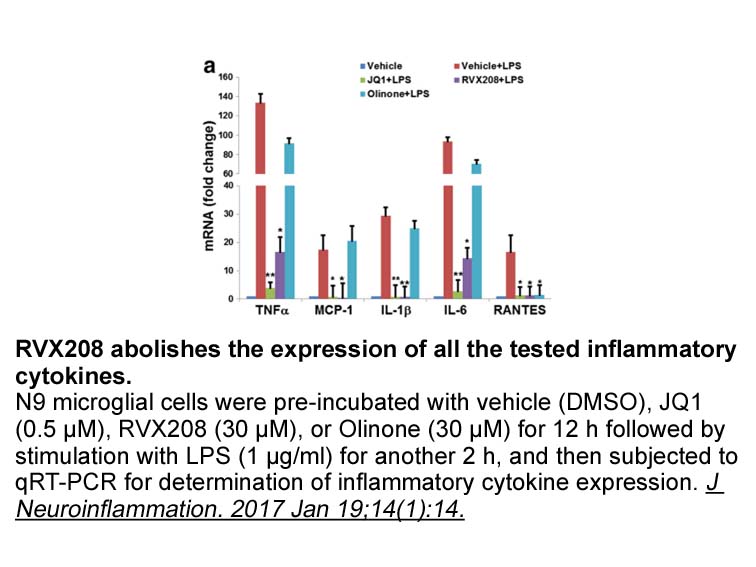
No effect on the Aβ production by γ-secretase was observed at 50μM, the highest effective concentration used in cultured zj to j by the study of Flajolet et al. IC261 did also not exert a modulatory effect on the production of Aβ, Aβ and Aβ species in the cell-free assay at this concentration. γ-Sec
-
N Cyclopentylmethyl analog exhibited fold less
2020-03-25
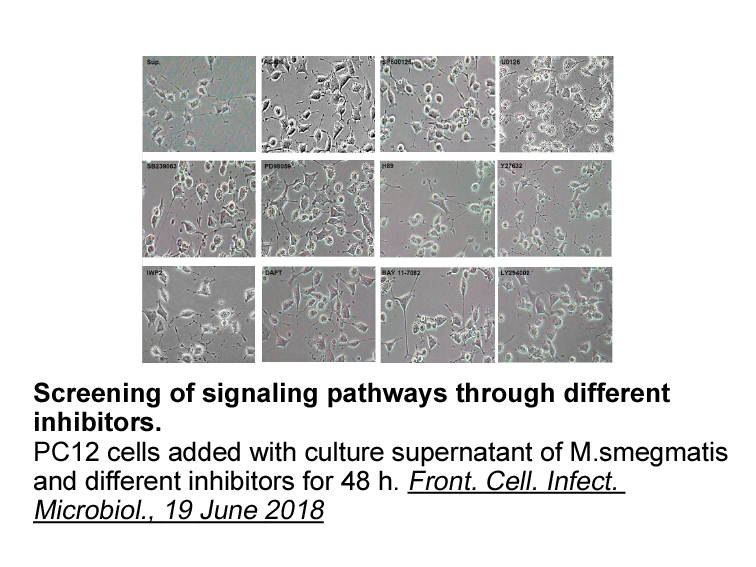
N-Cyclopentylmethyl analog 25 exhibited 2.3-fold less potent receptor affinity and 1.6-fold less potent antagonist activity. Among the compounds tested, the N-isobutyl analog 23 showed the most potent EP1 receptor affinity and antagonist activity. In summary, a series of 4-( 2-[alkyl(phenylsulfonyl
-
Phenolic compounds generated during biomass pretreatment inh
2020-03-25
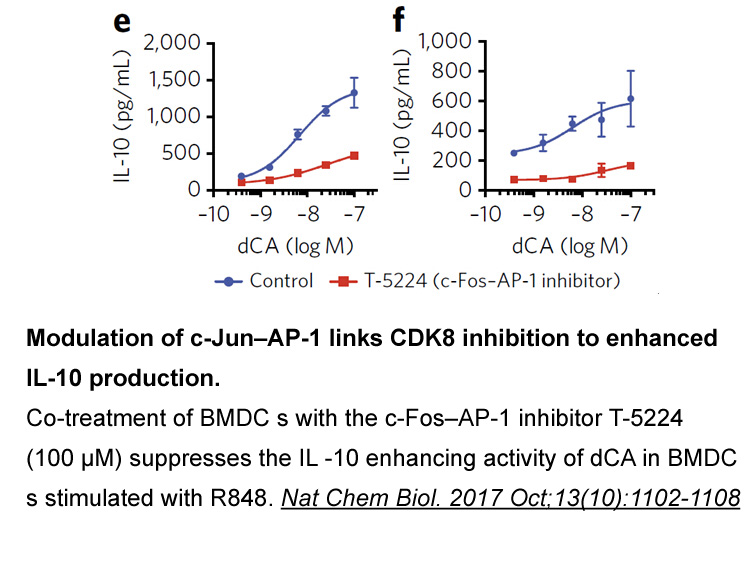
Phenolic compounds generated during APETx2 pretreatment inhibit and/or deactivate cellulolytic/hemicellulolytic enzymes as well as the viability and fermentative capacity of yeast and bacteria [4], [5], [6], [7], [8], [9], [10], [11], [12], [13]. Phenolic compounds cause changes in protein conforma
-
While agnathans appear to have reduced their Ednr repertoire
2020-03-25
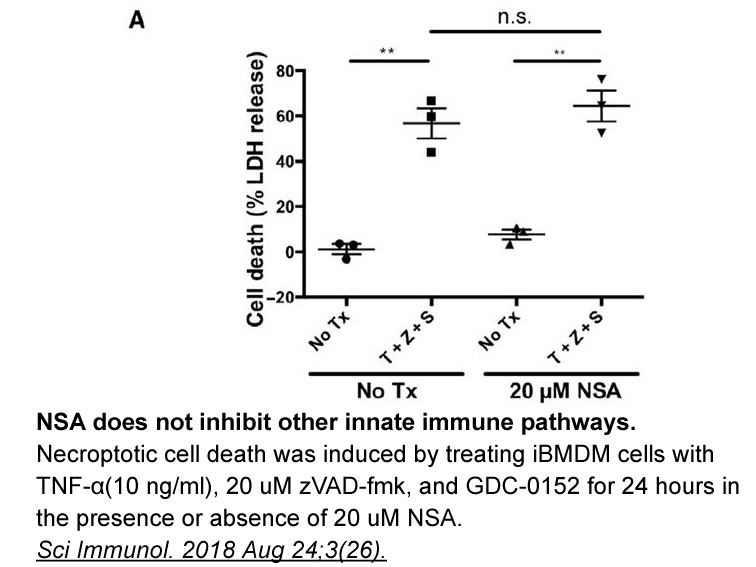
While agnathans appear to have reduced their Ednr repertoire to the Ednra gene (that may have been amplified in the Arctic lamprey), gnathostomes in general have been relatively inert to Ednr gene loss. Strikingly, the only Ednr gene that has been lost repeatedly is EdnrB2 (lost in therian mammals,
-
Since the number of peptides hydrolized by PEP is quite
2020-03-25
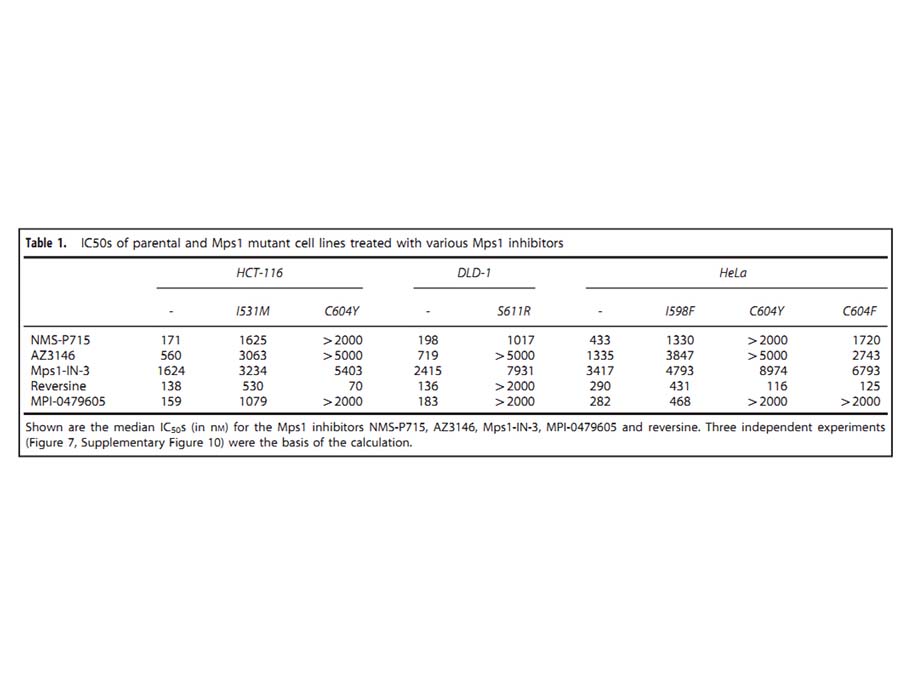
Since the number of peptides hydrolized by PEP is quite large, it is not easy to relate the increase of enzymatic activity with the altered changes of a concrete peptide. However, it is noticeable that imbalances of several natural substrates of PEP [6], such as angiotensins, bradykinin, vasopressin
-
During the past few years
2020-03-25
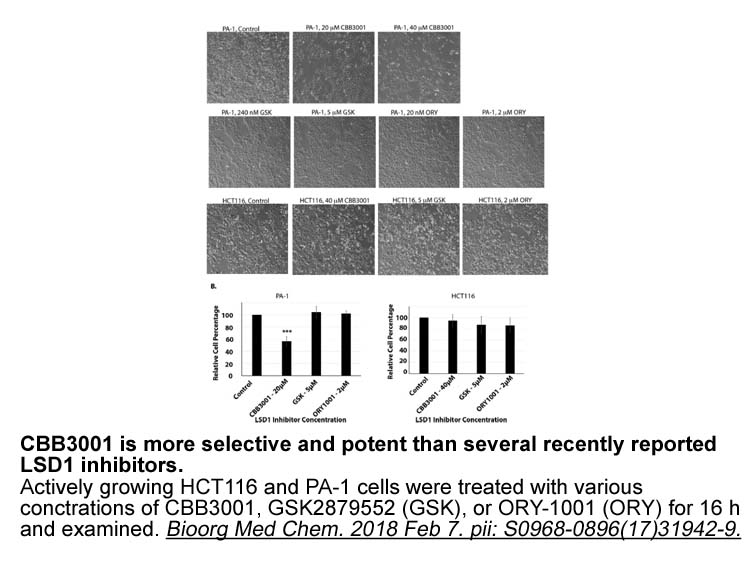
During the past few years, several studies have addressed macrophage phenotype in experimental models, such as angiotensin II-induced AAA. A first study investigated macrophage phenotype using flow cytometry to identify M1 and M2 macrophages and qPCR analysis for expression of NOS2 and Ym1/2. The au
16534 records 896/1103 page Previous Next First page 上5页 896897898899900 下5页 Last page